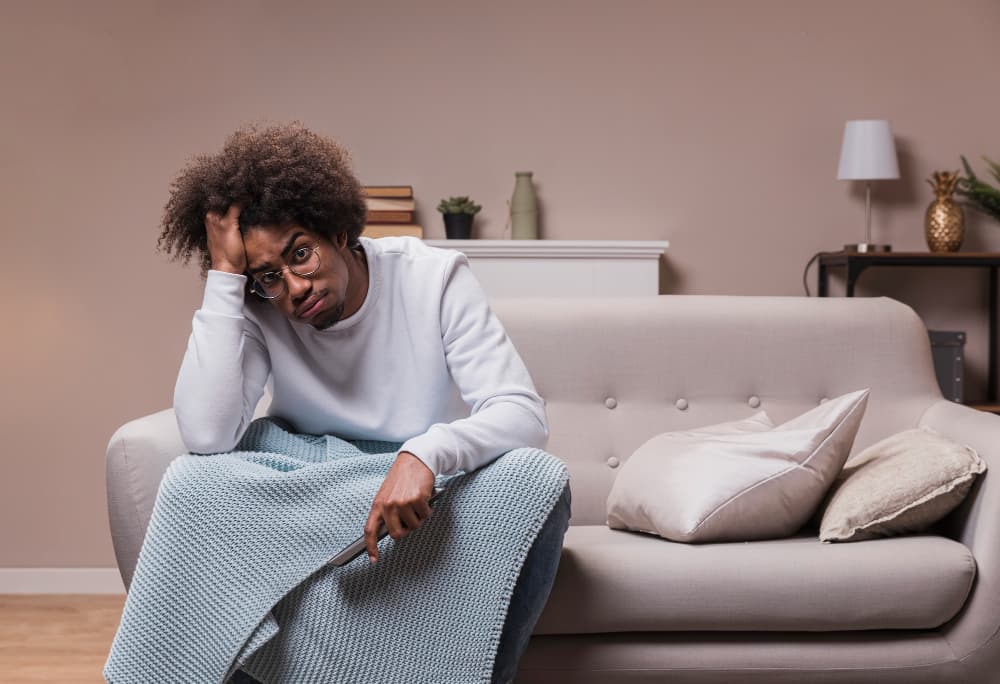

A racing heart, a tight chest and the feeling that something is badly wrong. Here is what an anxiety attack usually feels like, how a panic attack differs, and what helps in the moment.
Anxiety attack symptoms usually include a racing heart, a tight chest, fast breathing, restlessness, an upset stomach and strong dread, building over minutes or hours around a worry. A panic attack is different: it surges suddenly and peaks within minutes.
“Anxiety attack” is a common name, not a diagnosis
Doctors and therapists don’t diagnose “anxiety attacks”. They talk about anxiety, which builds and lingers, and about panic attacks, which follow a specific pattern. People use “anxiety attack” for both, so it helps to know which one you are describing.
Common symptoms of an anxiety attack
In your body
- A racing or pounding heart
- A tight chest, or shallow and fast breathing
- Tense muscles, especially in the shoulders and jaw
- Sweating, shaking or feeling hot
- An upset stomach, nausea or needing the toilet
- Headache, dizziness or feeling faint
- Exhaustion afterwards
In your mind
- Dread, or a sense that something bad is about to happen
- Racing thoughts you can’t switch off
- Trouble concentrating on anything except the worry
- Irritability and feeling on edge
In what you do
- Pacing, fidgeting or checking your phone again and again
- Avoiding the thing you’re worried about
- Struggling to sleep
These symptoms usually build around something specific: a deadline, a family problem, money, a health scare. They rise and fall, and ease as the pressure passes. For more on the body’s side of it, see physical symptoms of anxiety.
What a panic attack feels like
A panic attack is a sudden rush of intense fear that peaks within minutes, often without an obvious trigger. It usually brings several of these at once:
- A pounding or racing heart
- Sweating, trembling or shaking
- Shortness of breath, or feeling smothered or choked
- Chest pain or discomfort
- Nausea or stomach distress
- Dizziness or feeling faint
- Chills or hot flushes
- Numbness or tingling
- Feeling unreal or detached from yourself
- Fear of losing control or “going mad”
- Fear of dying
Most panic attacks peak within about ten minutes and settle within half an hour, though you may feel shaky and drained for longer. They can also wake you from sleep.
Anxiety attack or panic attack: the differences
| Anxiety attack | Panic attack | |
|---|---|---|
| How it starts | Builds gradually | A sudden surge |
| Trigger | Usually a clear worry or stressor | Can come out of nowhere |
| Peak | Rises and falls | Peaks within minutes |
| How long | Minutes to hours, sometimes longer | Usually under half an hour |
| Intensity | Mild to severe | Intense and often terrifying |
| Afterwards | The worry continues | Often a fear of the next attack |
You can have both. Ongoing anxiety makes panic attacks more likely.
Suggested read: How to Deal With Stress: A Practical Plan for Nigerians

Is it anxiety, or my heart?
Chest pain, breathlessness and a racing heart can come from anxiety, and they can come from the heart. Many people in Nigeria have their first panic attack checked at a clinic or A&E, worried about their heart or their blood pressure. That is the right instinct.
Get checked urgently if:
- It is the first time and you have chest pain.
- The pain spreads to your arm, jaw or back, or comes on with exertion.
- You have heart disease, high blood pressure or diabetes, or you smoke.
- You faint, or you can’t catch your breath even at rest.
If you are unsure, treat chest pain as an emergency: go to the nearest hospital or call 112. Once a doctor has ruled out your heart, you can treat later episodes as what they are.
What to do during an attack
- Name it. “This is anxiety. It feels awful, and it will pass.”
- Breathe out longer than you breathe in. In through your nose for a count of four, out through your mouth for six, for two or three minutes. A slow out-breath tells your body to stand down. There are more in our guide to breathing techniques.
- Ground yourself. Name five things you can see, four you can touch, three you can hear, two you can smell and one you can taste.
- Don’t fight the sensations. Trying to force them away tends to feed them. Let them rise and fall.
- Stay where you are if you’re safe. Leaving teaches your brain that the place was dangerous.
For a step-by-step guide to panic in particular, read how to handle a panic attack.
What makes attacks more likely
- Too little sleep
- Caffeine: strong coffee, energy drinks, kola nut
- Alcohol, especially the day after
- Long stretches without eating
- Stress that has built up with no outlet
- Some medicines and health conditions, such as an overactive thyroid, which a doctor can check
When to get help
See a professional if the attacks keep coming back, if you’ve started avoiding places, if you’re worrying about the next attack, or if anxiety is there most days. Repeated panic attacks with a fear of the next one may be panic disorder. Daily worry that won’t switch off may be generalised anxiety.
Both respond well to treatment. Cognitive behavioural therapy (CBT) has the strongest evidence. A doctor or psychiatrist may also suggest medication, and that is a decision to make with them, not with a chemist.
Read more about anxiety, or find a therapist who works with anxiety and panic. Sessions are by video, voice or chat.
Frequently asked questions
What does an anxiety attack feel like?
Most people describe a racing heart, a tight chest, fast breathing and strong dread, often with an upset stomach, shaking or sweating. It usually builds around a specific worry.
How long does an anxiety attack last?
It varies. Anxiety can build and linger for minutes or hours. A panic attack usually peaks within about ten minutes and settles within half an hour.
Can an anxiety attack feel like a heart attack?
Yes. Chest pain, a racing heart and breathlessness can happen in both. If you are unsure, treat it as an emergency and get checked.
Suggested read: What Does an Anxiety Attack Feel Like?
Can you have an anxiety attack in your sleep?
Panic attacks can wake you from sleep. They are frightening but not dangerous, and they respond to the same treatment.
Are anxiety attacks dangerous?
They feel dangerous but are not harmful in themselves. The real risks are mistaking a heart problem for anxiety, and letting the fear of attacks shrink your life.
This article is awaiting clinical review. It’s based on published research and health guidelines, and we’ll update it once a clinician has reviewed it.