
The calls start before 7am. Then the messages reach your mother, your boss and your church WhatsApp group, calling you a thief. If a loan app is doing this to you, you have rights, and the shame you feel is exactly what the tactic is meant to produce.
Loan app harassment, such as threats, insults or messages to people in your phone, is what Nigeria’s 2025 digital lending rules were written to stop. Keep the evidence, complain to the lender in writing, then report to the FCCPC. Owing money doesn’t cancel your rights.
If the pressure has brought thoughts of ending your life, call Safe Place Nigeria on 0800 800 2000, free and open 24 hours. If you’re in immediate danger, call 112, or 767 in Lagos.
What loan app harassment looks like
- repeated calls and messages at all hours, often from different numbers
- insults, threats, and claims that you’ll be arrested
- messages to your contacts, colleagues or employer calling you a thief or a fraudster
- your photo, sometimes edited, posted in WhatsApp groups or on social media
- pressure to pay more than you agreed, or charges nobody told you about
The Federal Competition and Consumer Protection Commission (FCCPC) says some online lenders used “public shaming, defamation, intimidation, and breaches of privacy” to recover money. Those practices are why it brought in new rules.
What the law says
The rules are the Digital, Electronic, Online, or Non-Traditional (DEON) Consumer Lending Regulations, 2025. They came into force on 21 July 2025, and the FCCPC enforces them.
- Who they cover. Non-bank lenders that give unsecured consumer loans digitally, including fintech companies, mobile loan apps and microfinance institutions. Commercial banks are regulated separately.
- Registration. Digital lenders must register with the FCCPC, which publishes a register of approved lenders. In January 2026 it removed lenders that hadn’t completed registration, and it advises caution with any lender that isn’t on the current list.
- Fair terms. Lenders must use clear, simple contract language and disclose all interest rates, fees and repayment schedules.
- Your data. Lenders must comply with the Nigeria Data Protection Act 2023. The FCCPC has said that lending apps reaching into your contacts, photos and call logs is intrusive and violates your privacy, and the privacy of the people in your phone.
- Penalties. Breaking the rules can bring fines of up to ₦100 million or 1% of turnover, disqualification of directors for up to five years, removal from app stores, and prosecution for serious offences such as data misuse and harassment.
An association of service providers challenged the rules in court, and the FCCPC paused enforcement in April 2026. On 20 July 2026 the Federal High Court in Lagos dismissed the case and upheld the rules, and the FCCPC says they’re fully enforceable again.
Google Play has its own rules too. Loan apps there aren’t allowed to access your contacts or photos, and Nigerian digital lenders need a verifiable FCCPC approval letter.
One honest point: the rules protect how you’re treated, not the debt itself. The FCCPC accepts that lenders may recover what they’re owed by legal and ethical means. If you borrowed the money, you still owe it. Being harassed doesn’t change that, and owing money doesn’t make harassment acceptable.
If it’s happening now: step by step
- Keep everything. Screenshot messages, call logs and posts, with the numbers, names, dates and times. Ask anyone who received messages to screenshot them for you. Keep your loan agreement and every repayment receipt.
- Check the register. Look the lender up on the FCCPC’s list of approved digital lenders at fccpc.gov.ng. If it isn’t there, say so in your report.
- Cut off the app’s access. In your phone’s settings, remove the app’s permission to see your contacts, photos and files. Save what you need before you delete anything.
- Write to the lender. Use the app’s complaint channel or email. Say what happened, ask them to stop contacting other people, and ask for the amount they say you owe, and how they worked it out, in writing. Keep a copy.
- Report to the FCCPC. Email lenderstaskforce@fccpc.gov.ng with your evidence, file a complaint at complaints.fccpc.gov.ng or through the FCCPC Consumer Complaint App, or call the FCCPC free on 0800 000 2121. The FCCPC says redress can take anything from a day to 45 days, depending on the case.
- Flag the app. On the app’s page in the Google Play Store, tap More, then Flag as inappropriate.
- Report threats of violence to the police, and take your screenshots with you.
Threats of arrest
“We’ll send the police” is a common pressure tactic. Owing money is generally a civil matter, not a crime. The Police Act 2020 (section 32(2)) and the Administration of Criminal Justice Act 2015 (section 8(2)) say a person shall not be arrested merely for a civil wrong or breach of contract. A Nigerian law journal has noted that police still sometimes get pulled into debt recovery, wrongly.
It’s different if a lender alleges fraud, for example that you borrowed using someone else’s identity. If the police actually contact you, stay calm, don’t sign anything you don’t understand, and get legal advice. The Legal Aid Council of Nigeria is one place to ask.
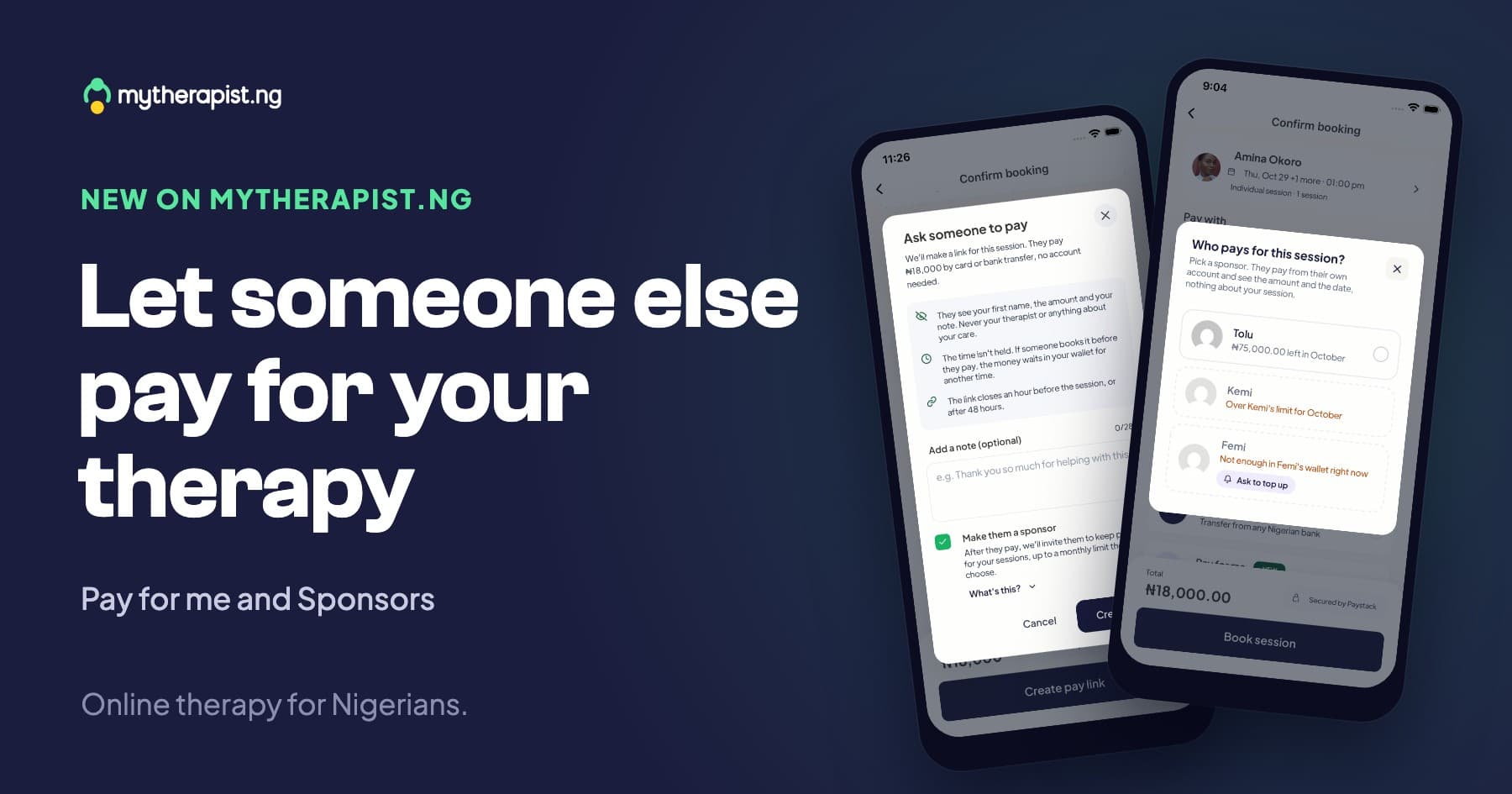
Suggested read: Introducing Pay for me and Sponsors: let someone else pay for your therapy
Tell your people before the lender does
Much of the harm comes from the messages to people you know. You can take some of the sting out by speaking first. A short message is enough:
“You may get messages from a loan company about me. Please don’t reply or send any money. Screenshot it and send it to me so I can report it. Thank you.”
If your workplace is contacted, a short, calm word with your manager or HR helps: “A lender has been messaging people in my phone. I’m dealing with it and I’ve reported it to the FCCPC.” You don’t owe anyone the full story.
What it does to your mind
Harassment by a lender is built on shame. It works by making you feel exposed, hunted and worthless, so that paying anything, at any cost, seems like the only way to make it stop.
Common reactions include:
- jumping every time your phone rings, or switching it off for days
- not sleeping, or waking at 3am doing sums
- avoiding family, friends or church because you don’t know who has seen the messages
- anger at yourself, or at the person whose emergency you borrowed for
- feeling pushed to borrow from another app just to make the first one stop
These are normal reactions to being targeted. They aren’t a verdict on your character.
Some things help:
- Separate the debt from your worth. People borrow for rent, school fees, hospital bills and food. Needing a loan isn’t a moral failure.
- Tell one person the whole picture. Secrecy gives the lender power. Shared, the problem gets smaller.
- Make decisions in daylight. Panic at night pushes you towards fast fixes that often make things worse. Give any money decision a day, and talk it through with someone you trust first.
- Take back your phone. Most phones can silence calls from unknown numbers. Choose set times to read messages, instead of reacting to every one.
- Keep the basics going. Eat, sleep and move as normally as you can.
If the stress has taken over your sleep, your work or your relationships, a therapist can help you deal with the shame and the anxiety and plan your next steps calmly. You can find a therapist for stress and burnout and talk privately by video, voice or chat. Our guides to stress and anxiety explain more.
If gambling is part of the story, read betting debt: what to do after big losses. If money worries are straining your relationship, see marriage under financial strain, and for the wider worry, financial anxiety.
If you’re having thoughts of ending your life, call 112 (or 767 in Lagos), or Safe Place Nigeria on 0800 800 2000. The full list is on our helplines page.
Suggested read: Social Anxiety at Parties and Owambes
If you received a message about someone else
- Don’t reply to the lender, and don’t send money to an account you don’t know.
- Screenshot it and send it to the person, kindly.
- Don’t forward it to the group or gossip about it.
- Check on them. Shame makes people go quiet, and you may be the person they most need not to judge them.
Frequently asked questions
Is loan app harassment illegal in Nigeria?
Digital lenders must follow the FCCPC’s DEON Regulations 2025, brought in to end public shaming, defamation, intimidation and privacy breaches. Harassment and data misuse can lead to fines, removal from app stores and prosecution. Report it to the FCCPC.
Can a loan app message my contacts?
The FCCPC says lending apps accessing your contacts, photos and call logs is intrusive and violates privacy, and Google Play bars loan apps from accessing contacts. If a lender has messaged your contacts, keep the evidence and report it.
Can a loan app get me arrested?
Owing money is generally a civil matter, and Nigerian law says no one should be arrested merely for a civil wrong or breach of contract. Fraud allegations are different. If the police contact you, get legal advice.
How do I report a loan app to the FCCPC?
Email lenderstaskforce@fccpc.gov.ng with your evidence, file a complaint at complaints.fccpc.gov.ng or in the FCCPC Consumer Complaint App, or call the FCCPC free on 0800 000 2121.
How do I know if a loan app is approved by the FCCPC?
Check the register of approved digital lenders on fccpc.gov.ng. The FCCPC removed lenders that hadn’t completed registration after its January 2026 deadline, and advises caution with any lender that isn’t listed.
Do I still have to pay the loan if they harassed me?
If you borrowed the money, the debt usually remains. Harassment doesn’t cancel it, and owing money doesn’t make harassment acceptable. Report the harassment, and ask the lender to set out what you owe in writing.